The Affiliate’s Guide to Expired Domains: How the Domain Lifecycle Unlocks Instant SEO Authority
Starting an affiliate marketing site on a blank, brand-new domain means facing the Google Sandbox—a 6-to-9-month dry spell where algorithmic filters suppress fresh content while your brand slowly earns crawl trust.Savvy affiliates skip this waiting game altogether by buying aged or expired domains that already have years of editorial backlinks, brand mentions, and trust baked into them.
Top affiliate operators avoid this delay by launching on aged domains with existing editorial backlinks, indexed brand mentions, and organic trust signals.
However, beginners often rely on a flawed strategy: they track a domain through the standard ICANN expiration cycle, wait 75+ days, and hope to pick it up on the public drop.
In modern domain acquisition, waiting for the public drop is the least efficient way to buy high-value digital real estate. Understanding the domain lifecycle reveals why—and highlights why elite domain investors and affiliate networks bypass public drops altogether, targeting registrar pre-release inventory instead.
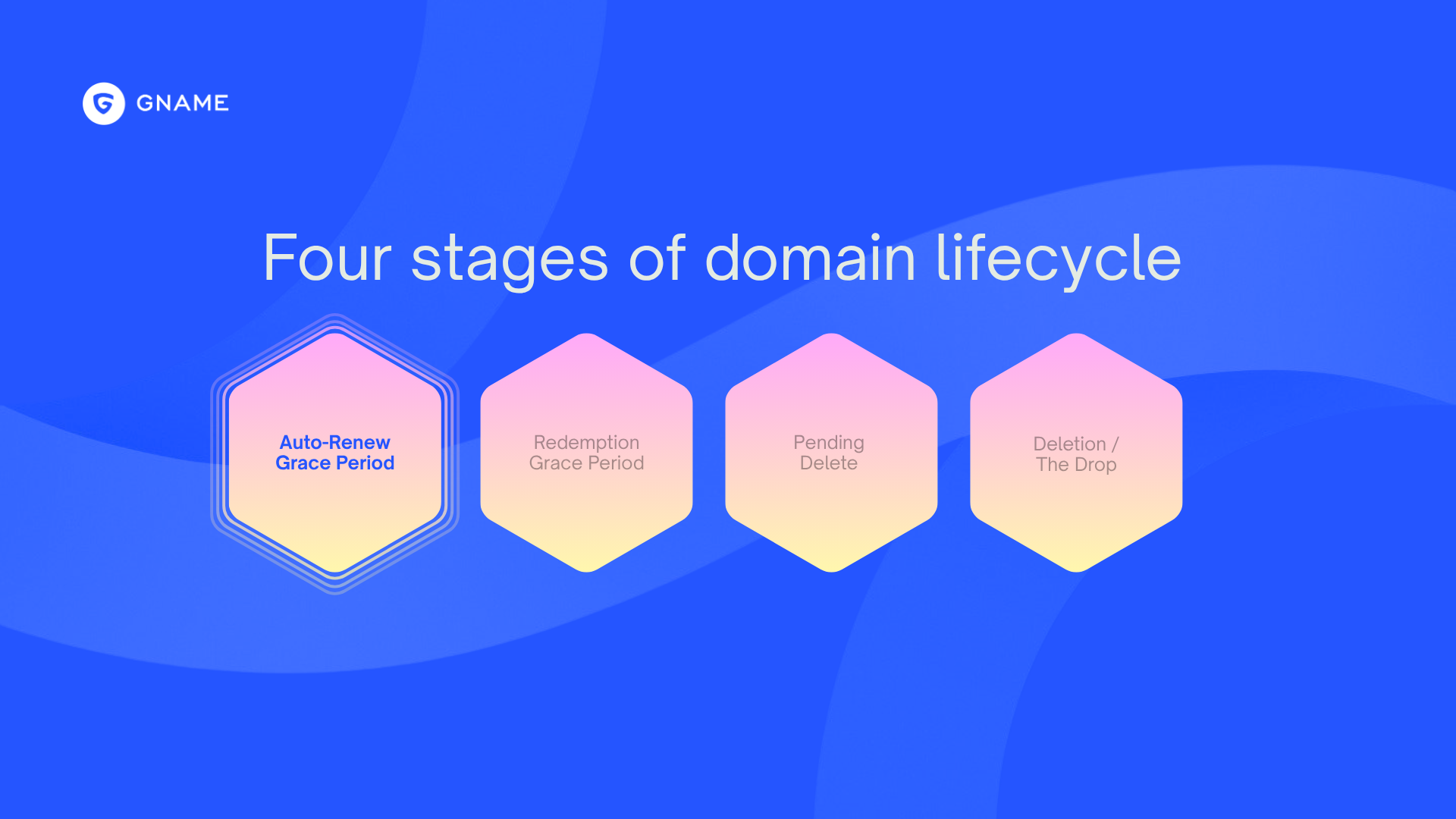
The Sweet Spot: The Auto-Renew Grace Period (Days 0 to ~45)
When a domain name crosses its official expiration date, it enters the Auto-Renew Grace Period (AGP). When acquiring secondary-market domains, names purchased during the AGP via pre-release registrar auctions retain significantly more SEO juice than domains bought at any later stage of the expiration cycle.
- What happens behind the scenes: We typically disable the domain's live DNS records. The original website goes dark or displays a default landing page
- Can an affiliate marketer buy it? Yes. The only way to purchase an AGP domain is through an expiring auction.
Why AGP Domains Retain the Most Equity
The degradation of SEO equity across domain lifecycles is driven primarily by downtime duration, RDAP/WHOIS continuity, and algorithmic trust resets. AGP minimizes the damage across all three:
- Unbroken Registration History (Continuous WHOIS / RDAP): In an AGP/pre-release acquisition, the registrar assigns the domain to the winning bidder via an internal account push without deleting it at the registry. The original creation date remains intact in registry records. Unlike drop-caught domains, it never registers a registry DELETE command or a reset to "Day 0".
- Minimal Downtime (15 to 35 Days): By the time an AGP auction clears, the domain has typically only been resolving to nameserver holds or registrar parking pages for 2 to 4 weeks. Search engine crawlers encountering temporary 5xx errors, DNS timeouts, or soft parking over a short period treat it as extended downtime rather than a permanent abandonment. Many inner URLs and cache entries often remain indexed or easily retrievable in the search index.
- Faster Indexation and Crawl Priority: Because inbound links from active external websites still resolve to the domain and the domain record never vanished from the root zone, search engine bots re-crawl the updated site rapidly once live content is restored.
- Lower Friction for Algorithmic Re-evaluation: Google’s Expired Domain Abuse classifiers aggressively target newly dropped, re-registered domains where history was severed and replaced by completely unrelated affiliate content. While AGP domains are not immune if a niche is completely mutated, they carry far less automatic algorithmic skepticism than names freshly re-registered off the drop list.
The Strategic Advantage: Registrar Pre-Release Inventory
Rather than letting expiring domains fall into the open redemption queue and drop publicly, we leverage direct registrar integrations to run Pre-Release drops through backorders. Most notably, if we complete the backorder for you uncontested, the domain is transferred to your GNAME account without entering auction.
1. Intercepting Value Before the Registry Lock
Pre-release occurs inside the Auto-Renew Grace Period (typically between Days 30 and 40), before the registry ever strips the zone files or imposes the 30-day redemption blackout.
Because we operate as a direct ICANN-accredited registrar and high-volume infrastructure provider, we are able to provide expiring inventory directly to our community through an exclusive pre-release pipeline.
2. Bypassing Public Drop-Catch Wars
When you participate in a pre-release catalog:
- You cut the waiting line: You don't have to wait 80 days to see if the asset actually drops. The acquisition happens in a predictable, compressed window.
- Lower competition, higher margins: You are bidding against active marketplace participants within GNAME’s ecosystem—not fighting against the entire global web of automated third-party scrapers and wholesale aggregators.
- Continuous Age Preservation: Pre-release transfers occur without a registry-level deletion event, protecting the continuity of the domain’s authority profile.
Evaluating Expired Assets for Affiliate SEO
Whether you secure an asset via pre-release or secondary backorders, run every prospective name through a rigorous three-point forensic audit:
| Checkpoint |
What to Look For |
Pass Condition |
Immediate Fail |
| Wayback Machine Snapshots |
Scan 2-to-3-year snapshot intervals across its entire operating history. |
Clean, uninterrupted topic relevance matching the original site. |
Sudden pivots to brand infringements or regulated verticals |
| Inbound Anchor Ratios |
Audit the backlink anchor cloud in Ahrefs or Semrush. |
Natural brand names, author references, and clean editorial citations. |
High concentrations of exact-match commercial anchors ("best credit cards", "cheap vpn"). |
| Historical Subdomain Footprint |
Check archive queries for wildcards (/web/*/[domain.com/](https://domain.com/)*). |
Standard folder structures (/about/, /category/, /product/). |
Thousands of random spam subdomains (auth.domain.com, promo99.domain.com) signaling past phishing exploits. |
Strategic Blueprint: Launching on Pre-Release Inventory
- Monitor Pre-Release Feeds Daily: Filter GNAME’s inventory directly by thematic relevance, historical authority metrics, and clean clean-archive indicators rather than passively waiting for drop lists.
- Snag Topical Authority in Adjacent Niches: You don’t need an exact-match keyword domain. If you are building a boutique coffee equipment affiliate site, an aged local roastery or café domain with existing culinary and lifestyle backlinks will transfer immediate topical authority.
- Reconstruct Pillar URLs: Use archive tools to map the top 3–5 URLs that hold the original domain's strongest inbound equity. Rebuild those exact URL paths with comprehensive, high-value informational content before monetizing with commercial affiliate links.
Closing Notes
Building a profitable affiliate engine doesn’t require burning six to nine months of your runway waiting for Google’s algorithmic sandbox to let you in, nor does it mean bleeding your startup capital in open public drop auctions against institutional bidding syndicates.
The harsh reality of modern SEO is that great content on zero-authority infrastructure is invisible. If you want immediate crawl priority, rapid indexation, and the ability to rank competitive product comparisons within weeks rather than quarters, your foundation has to be built on an aged digital asset that already commands algorithmic trust.
However, how you acquire that asset dictates whether you build a viable business or inherit an overpriced headache. Waiting out the legacy 80-day ICANN drop cycle is an amateur’s trap: by the time an asset hits Pending Delete, every commercial scraper on the web has flagged it, triggering inflated secondary auctions where you are forced to pay retail markup for wholesale value.
By shifting your acquisition strategy to direct registrar pre-release pipelines like GNAME, you intercept high-authority inventory before it ever falls into public drop-catch contention. You protect the asset's technical continuity, bypass predatory auction run-ups, and eliminate months of idle waiting.
Audit your Wayback archives rigorously for topical integrity, filter out toxic anchor footprints, secure clean pre-release assets in your niche, and deploy your review architecture onto domain infrastructure built to deliver organic momentum from day one. Good luck out there.